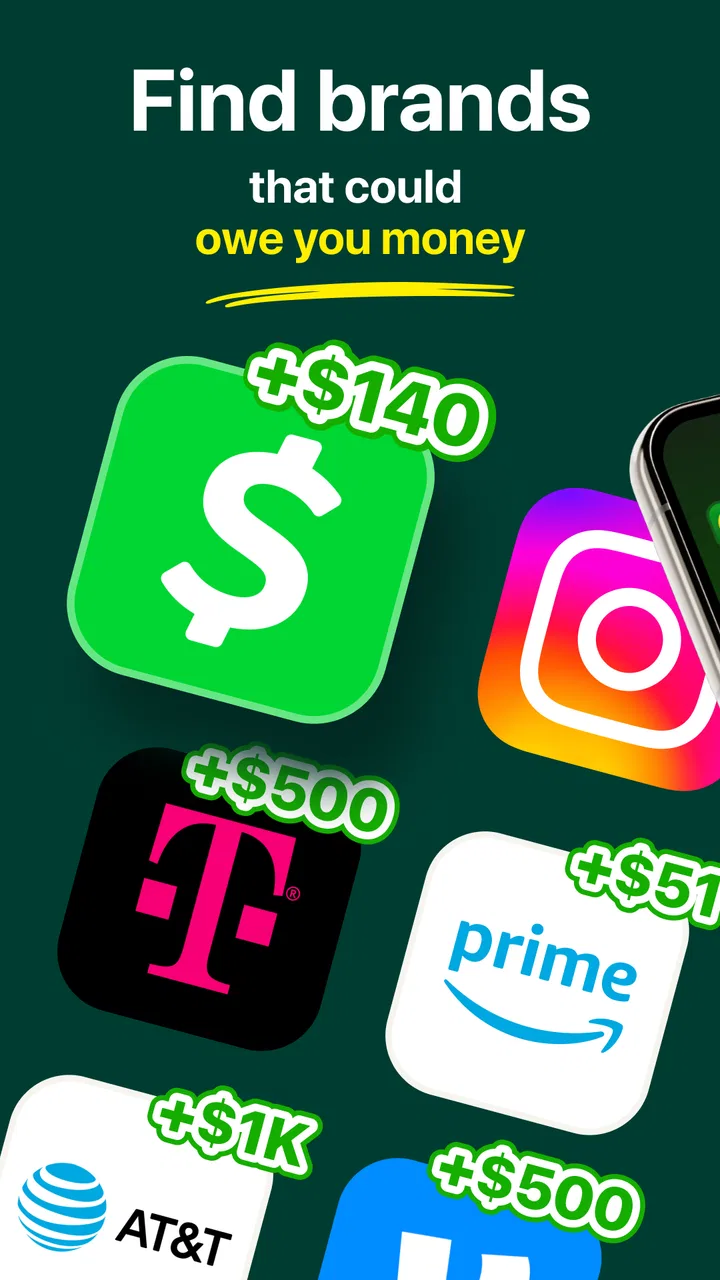
ClaimHunt: Class Action Claims
- 4.8
- Rating
- 10.00K
- Installs
- Free
- Price

 Analysis by App-foxy
I approached ClaimHunt: Class Action Claims as a practical finance app rather than something I would open every day for entertainment. Its purpose is straightforward: it helps me look for settlements, identify payouts I may be eligible for, and keep an eye on refunds connected with class actions. That sounds simple, but the usefulness depends heavily on timing, attention to detail, and a reliable connection when I need to search or review a claim.
My first impression is that this is aimed at people who do not want to spend hours searching the internet for consumer settlements. Instead of treating class actions as legal news to read occasionally, the app turns them into possible tasks to check: find an opportunity, read the eligibility information, decide whether it applies, and follow the status of the money. I like that practical focus, although it also means the app is only as valuable as the accuracy and relevance of the opportunities it presents to me.
How ClaimHunt fits into everyday financial housekeeping
Push apps developed this free finance app, which has an Everyone age rating and a current version of 1.5. It has reached over 10 thousand installs and holds a 4.8 average from around 1.4 thousand ratings, with 68 written reviews. Those figures suggest that people who discover it generally respond well, but I would still treat the rating as an invitation to investigate rather than proof that every settlement will suit my situation.
You May Also Like

 Pandora - Music & Podcasts
Pandora’s Music Is Easy to Start, but Harder to Recover
Pandora’s strength is its low-effort path from a seed to a station. Its weak spot is how much confidence it asks you to place in connection, setup, and quiet recovery.

 8 Ball Pool
 Is Built on Rivalries, Rematches, and Routine
A close look at the rivalries, rematches, shared routines, and unanswered safety questions that turn a quick pool match into a persistent mobile community.

 Samsung Music
’s Quiet Strength Is Playing What You Already Own
Its reach comes less from spectacle than from dependable access to a personal library. That simplicity is both the app’s strongest retention engine and its ceiling.

 AccuWeather: Weather Radar
AccuWeather Review: A Quick, Clear Forecast for Everyday Decisions
For everyday plans, the best forecast is the one you can understand quickly. AccuWeather makes rain timing, radar, and local conditions easy to act on, with a few trade-offs.

 Hill Climb Racing
Why Hill Climb Racing Still Turns Crashes Into One More Run
A tiny car, a bumpy hill and one more upgrade: Hill Climb Racing keeps resurfacing because its simple chaos makes every near-miss feel personal.

 AliExpress - Shopping App
AliExpress Makes Global Shopping Feel Personal, but Shoppers Bear the Risk
AliExpress turns a global marketplace into a pocket-sized discovery engine. Its reach is useful, its shopping loop compelling, and its trade-offs easy to miss.
More From Our News Desk
View All News


The basic appeal is the possibility of recovering money from claims I might otherwise never hear about. Many people already check bank statements, subscription renewals, and shopping receipts, yet class action settlements are easy to miss because they may involve an old purchase, a discontinued service, or a product used during a particular period. ClaimHunt gives that overlooked category a more visible place in my financial routine.
There is an important distinction between finding a settlement and receiving a payment. The app can help me locate a possible claim and track a refund, but eligibility still depends on the settlement’s own rules. I would not assume that seeing a listing means I automatically qualify. I need to read the dates, purchase conditions, required proof, deadlines, and payment terms before submitting anything.
Where the internet connection matters most
The network-dependent parts of the experience are easy to understand. Searching for current settlements, opening claim details, and checking updates all rely on fresh information. When I am on a stable home or office connection, the app’s concept feels efficient because I can move from discovery to examination without switching between many browser tabs.
The more delicate moment comes when I am using mobile data in a crowded place, on public transport, or in a building with weak reception. A settlement page is not something I want to skim casually if it contains eligibility conditions or instructions. If a page loads slowly, I would rather wait than make a rushed decision based on incomplete text. This is especially important when a claim has a deadline or asks for supporting information.
I found the best workflow is to use the app in two passes. During a quick connection, I can notice new opportunities and save the names or details that look relevant. Later, on a stronger connection, I can read the full information carefully and decide what action makes sense. That small change prevents a poor signal from turning a potentially useful discovery into a confusing half-finished task.
Connectivity also affects tracking. A refund or claim update is time-sensitive, so I would not rely on a single glance while offline or assume that an old screen represents the latest status. When I care about a particular claim, I make a habit of reopening it with a reliable connection before deciding that nothing has changed.
Useful mobile situations, and the ones I would avoid
ClaimHunt makes the most sense in short, deliberate sessions. I can imagine checking it while reviewing household finances at the kitchen table, after noticing an unfamiliar charge in an old email, or during a monthly admin routine. Those situations give me enough time to compare the app’s information with receipts, order confirmations, and account records.
A realistic example would be a family member remembering that they used a service several years ago but not knowing whether a related settlement exists. I could search the app, note the relevant settlement, then check old emails and payment records before continuing. The app helps with discovery, but my own records remain essential because memory alone is rarely enough for a careful claim.
Short phone sessions can also be useful when I am waiting somewhere, but I would avoid completing a complicated claim in a queue or while walking. Legal and financial wording deserves concentration. A mobile screen encourages fast tapping, and that is exactly when I might overlook a qualification, misunderstand a deadline, or attach the wrong document if the process requires evidence.
For people who manage finances on a phone, the mobile format is convenient because settlement research can happen alongside ordinary money tasks. However, anyone who prefers a large screen for reading detailed terms may find a desktop browser more comfortable for the final review. I see the app as a discovery and monitoring companion, not a replacement for careful document reading.
What I do when a page fails or a status seems unclear
Connection problems are not the only possible source of friction. A page may fail to load, an update may take time to appear, or a claim may use wording that leaves me unsure whether my circumstances qualify. My first response is to stop rather than repeatedly submit information. I check the connection, reopen the relevant screen, and compare what I see with the settlement’s instructions.
I also keep a simple record of what I have done. For a claim that matters, I note the settlement name, the date I reviewed it, the documents I used, and any confirmation shown after submission. This is not a feature I am attributing to the app; it is my own safety net. It makes recovery easier if I lose the page, change networks, or later need to remember whether I already completed a step.
One non-obvious advantage of this approach is that it separates technical recovery from eligibility decisions. If a screen fails, I do not immediately conclude that I am ineligible. If a claim does not appear, I do not assume it has disappeared permanently. I retry later with a better connection, then verify the information before taking action. That habit is more reliable than treating every temporary loading problem as a final result.
I would also be cautious about duplicate submissions. If the app appears slow after I tap a button, I would wait and check for confirmation instead of tapping repeatedly. Submitting the same information several times can create uncertainty about which attempt counts. Keeping a note of the confirmation or reference shown to me, when one is provided, gives me a clearer recovery path.
Using the app without wasting mobile data
Although settlement information is usually text-heavy, pages can still consume more data than I expect if they include supporting material or repeated updates. My practical tip is to avoid browsing every listing on mobile data. I first scan for settlements connected with products, services, or purchases I genuinely recognize, then spend time on the few that deserve a closer look.
This selective method improves more than data usage. It reduces the chance that I will confuse a familiar brand with an eligible claim. Recognition is only the first filter; the relevant purchase period, location, account type, and proof requirements may still exclude me. Reading fewer listings carefully is better than opening everything and remembering none of the conditions.
I would also avoid using public Wi-Fi for sensitive steps unless I trust the network and understand what information the claim process requests. A settlement may involve personal details, purchase evidence, or payment information. The app’s presence in the finance category makes me treat those moments with the same care I would use for any money-related service, even when the initial search feels harmless.
Another useful habit is to prepare before opening a claim. I gather likely receipts, emails, order numbers, or account information first, without assuming that all of it will be needed. That keeps the connected session shorter and helps me notice whether the evidence actually matches the settlement’s requirements. It also prevents me from submitting a rushed claim simply because I have already opened the page.
Who will get the most from ClaimHunt
I think ClaimHunt is particularly suitable for people who regularly forget about settlement deadlines or do not know where to look for them. It can also help households that want one recurring place to review possible refunds instead of depending on social media posts, random email alerts, or occasional web searches.
It is useful for detail-oriented users who are willing to verify every opportunity. The app can shorten the discovery stage, but it does not remove the need for judgment. Someone who enjoys checking receipts and comparing dates will probably get more value from it than someone who expects a quick button to produce money.
It may be less suitable for users who rarely make online purchases, do not keep transaction records, or find legal settlement language frustrating. In those cases, the time spent checking eligibility may outweigh the likely benefit. I would also skip it as a primary financial tool if I need budgeting, bill management, investment tracking, or account aggregation. Its role is narrower: settlement discovery, claim-related action, and refund tracking.
The free download lowers the barrier to trying it, but the app includes in-app purchases ranging from $6.99 to $39.99 per item. I would pay close attention to what any optional purchase provides before spending money. A settlement-finding app should be judged by the clarity and usefulness of its information, not by the assumption that paying will guarantee eligibility or a payout.
How it compares with ordinary alternatives
The usual alternative is to search the web manually. That approach can be more flexible because I can compare official settlement pages, court notices, consumer organizations, and news coverage. It can also be tiring and inconsistent. I may search at the wrong time, miss a relevant phrase, or forget which opportunities I already checked. ClaimHunt’s advantage is concentration: it gives this specific type of financial task a dedicated place on my phone.
Email alerts are another alternative. They can be convenient, but inboxes are crowded, and a message about a settlement may look like advertising or arrive when I am not ready to act. A dedicated app encourages a deliberate review instead of relying on a single message remaining visible. The trade-off is that I must remember to open the app and maintain my own checking routine.
Manual spreadsheets can work well for organized users. I could record a settlement name, deadline, evidence, and status myself, gaining complete control over the format. ClaimHunt is more convenient for discovery and tracking, while a spreadsheet may be better for a household that wants to combine claims with broader financial records. In my view, the strongest approach could be to use the app to find opportunities and a personal note or spreadsheet to preserve important details.
I would not compare it directly with a budgeting app because the jobs are different. A budget app helps me understand spending and plan cash flow; ClaimHunt focuses on possible recovery from settlements. Someone choosing between them should not ask which is universally better. The real question is whether the immediate need is managing money already in hand or investigating money that might become available after a claim.
Privacy-minded habits and careful claim decisions
Any app connected with refunds deserves a cautious approach to personal information. I would read each claim’s instructions before entering details, provide only what is necessary, and avoid uploading documents that do not support the eligibility check. Keeping original files in my own storage also gives me a reference if I later need to confirm what I submitted.
I would never treat a polished listing as a substitute for the settlement’s official terms. The app can make a possible opportunity easier to notice, but the legal notice remains the authority for deadlines, definitions, and payment conditions. This is one of the most important trade-offs: convenience at the discovery stage versus responsibility at the verification stage.
There is also a behavioral risk. Seeing several possible claims can create the impression that a payout is likely or immediate. I remind myself that a claim can take time, require proof, or produce a payment that differs from my expectations. Using the app as a research tool keeps my expectations realistic and stops a possible refund from becoming part of my budget before it arrives.
My connectivity verdict
After using ClaimHunt with connectivity in mind, I see it as a focused finance app for people who want a more organized way to look for class action settlements and follow refund-related activity. Its strongest moments occur when I have a stable connection, a few minutes to read carefully, and enough personal records to check whether an opportunity genuinely applies.
The app is not a shortcut around eligibility rules, and it is not the right choice for full financial management. Weak reception, rushed mobile use, and incomplete records can make the experience less reliable. I also think users should examine optional purchases carefully rather than assuming that paying improves the odds of receiving money.
Still, I appreciate the narrow purpose. Compared with hoping that a settlement email reaches me or repeatedly searching the web from scratch, a dedicated place to review possible claims can make an easily forgotten task more visible. My recommendation is for organized, patient users who are comfortable verifying details themselves. If that sounds like you, ClaimHunt is worth trying as a settlement-tracking companion, especially when used on a dependable connection and alongside your own records.
For me, the deciding factor is not the promise of effortless payouts. It is the combination of discovery and follow-up. I would open it during a regular monthly money check, investigate only claims connected with purchases I can verify, record what I submitted, and return later to review updates. Used that way, this free app from Push apps has a clear and useful place in a careful financial routine.
ClaimHunt: Class Action Claims is available for users on Android 7.0 or later, remains free to install, and is rated for Everyone. Its 1.5 release gives it a focused identity rather than trying to become an all-purpose money manager, and that specialization is both its main strength and its clearest boundary.
FAQs for ClaimHunt: Class Action Claims
01What is ClaimHunt: Class Action Claims, and how does it work?
ClaimHunt: Class Action Claims is an app designed to help users discover class action settlements and determine whether they may qualify to submit a claim. After creating a profile, you can browse available cases, review eligibility requirements, deadlines, and potential compensation details. The app may also provide reminders or guidance, but users should always read the official settlement notice before submitting information.
02Is ClaimHunt: Class Action Claims free to download and use?
The app may be available to download without an upfront charge, but users should review its current terms, privacy policy, and any in-app conditions before using it. Claim-related services can sometimes involve administrative arrangements or other limitations, depending on the case. ClaimHunt does not guarantee that every submitted claim will be approved or that a payment will be received.
03Can I use ClaimHunt to find class action settlements I qualify for?
ClaimHunt can help organize and present information about class action settlements, but eligibility depends on the specific case requirements. These may include where you live, when you purchased or used a product, whether you received a notice, and whether you experienced a qualifying issue. Carefully compare your circumstances with the official settlement rules before filing a claim.
04Is it safe to provide personal information through ClaimHunt?
Before entering personal, financial, or contact information, review ClaimHunt’s privacy policy and understand how data may be collected, stored, shared, or used. Only provide details required for a legitimate claim, and avoid submitting sensitive information through unofficial links or messages. For extra protection, download the app from a trusted store and keep it updated.
05Does using ClaimHunt guarantee that I will receive money from a settlement?
No. Using ClaimHunt or submitting a claim does not guarantee payment. Claims may be rejected because eligibility requirements are not met, information is incomplete, documentation is missing, or the settlement fund is distributed according to court-approved rules. Payments can also vary by case and may be reduced if many eligible participants submit valid claims.
Pros
- Simple claim-filing process with clear step-by-step guidance.
- Helps users discover eligible class action settlements in one place.
- Saves time by organizing deadlines and required claim details.
- Useful reminders can help prevent missed filing dates.
- No need to research settlement websites individually.
Cons
- Eligibility varies
- so many listed settlements may not apply to you.
- Payout amounts are often uncertain and can be relatively small.
- Some claims require supporting documents or purchase information.
- Personal and payment details require trust in the service’s privacy practices.
- Settlement availability and deadlines can change without much notice.

ClaimHunt: Class Action Claims
Gallery